

Are Soy Wax Candles Safe? A Candle Maker’s Perspective on Clean Burning
I’ve spent years working with wax, wicks, and fragrances, and if there is one question I hear more than any other, it is this: Are soy wax candles safe? It is a fair question. We live in an era where we look closely at the labels on our food and the ingredients in our skincare, so why should the air we breathe at home be any different? When you light a candle, you are essentially starting a small chemical reaction in your living room. You deserve to know exactly what that reaction is releasing into your space.
The short answer is yes: soy wax candles are safe and often a much cleaner choice than mass-produced alternatives. However, as with anything in the world of craft and chemistry, the nuance matters. If you want to skip the deep dive and see what a truly clean candle looks like, you can browse our full collection of hand-poured soy candles here.
Understanding the Source: From Farm to Flame
To understand why so many people ask; are soy wax candles safe, we first have to look at what they are actually made of. Soy wax is a processed form of soybean oil. After the beans are harvested, they are cleaned, cracked, and rolled into flakes. The oil is then extracted and hydrogenated, which turns it from a liquid into a solid at room temperature.
This is a stark contrast to paraffin wax, which is the industry standard for most big-box store candles. Paraffin is a byproduct of the petroleum refining process. It is literally the sludge left over when crude oil is turned into gasoline and motor oil. While paraffin has been used for decades, many people are moving away from it because they prefer a plant-based, renewable resource over a fossil fuel byproduct. Soybeans can be replanted and harvested every single year, making them a sustainable choice for anyone conscious of their environmental footprint.

The Reality of Indoor Air Quality
When we talk about whether soy wax candles are safe to breathe, we are usually talking about soot and volatile organic compounds. Every time you burn something, whether it is a log in a fireplace or a piece of toast, you create emissions. The goal is to minimize those emissions as much as possible.
One of the most immediate benefits of soy wax is that it produces significantly less soot than paraffin. You might have noticed a black ring around the top of a candle jar or even faint staining on your walls after burning candles for a long time. That is carbon soot, and paraffin is notorious for it. Soy wax burns much cleaner, which means you aren't just protecting your walls; you are keeping the air in your home clearer.
That said, I always tell my customers that the candle itself is only half of the story. A candle’s safety and performance also depend on how it is handled. Even the highest-quality soy candle will struggle if the wick is too long or if it is placed in a strong draft.
Soy Wax vs. Paraffin: A Side-by-Side Look
It helps to see the differences laid out clearly. I’ve put together this comparison to show why we choose soy for every single one of our Luxe + Grace pours.
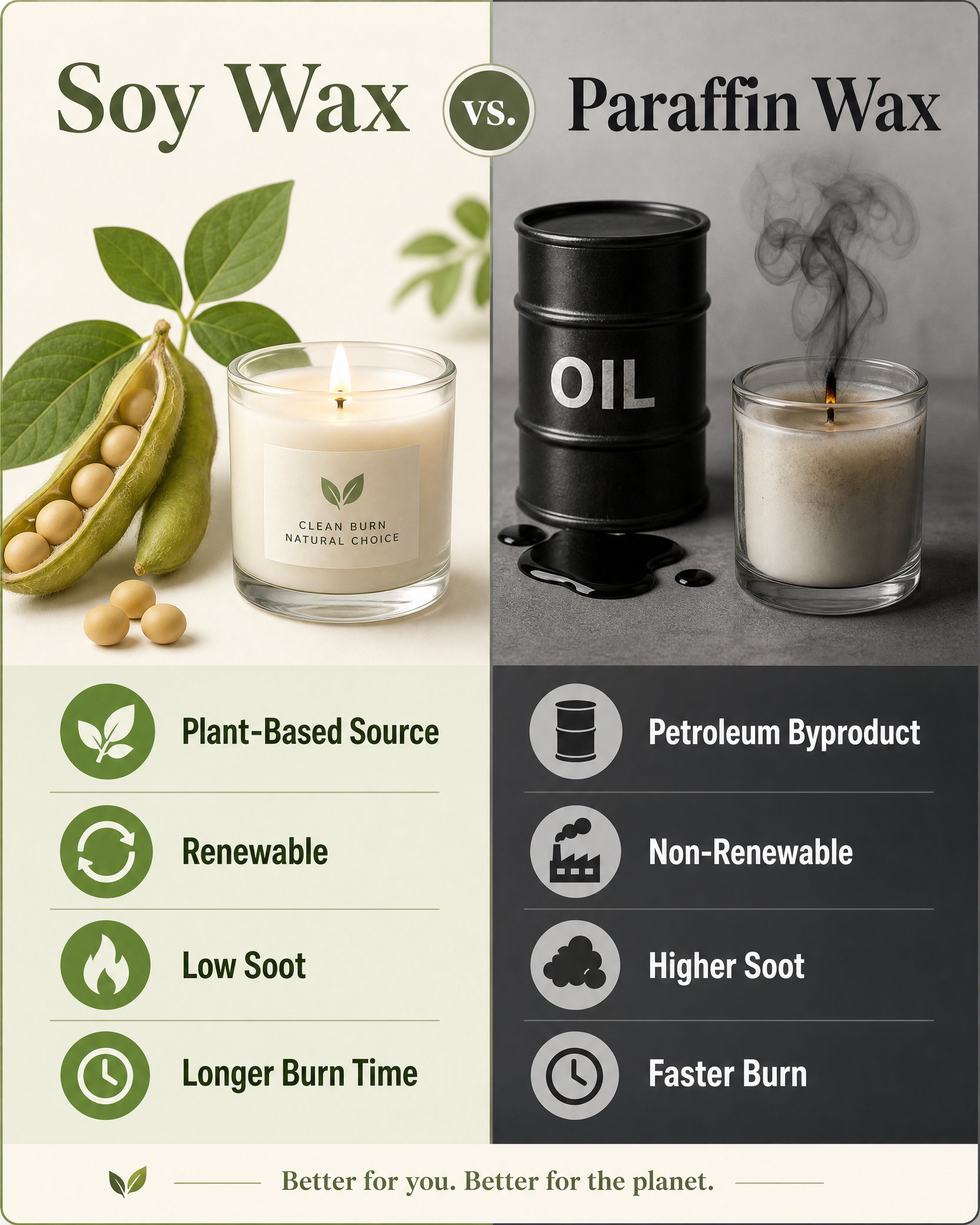
Beyond the environmental benefits, soy wax has a lower melting point. This means the candle burns slower and lasts longer, giving you more value for your money. It also allows the fragrance to be released more gently and consistently, rather than the overwhelming "chemical" scent often associated with cheaper paraffin blends.
Quality Control and Transparency
If you are looking for a safe candle, the label "soy" isn't always enough. In my experience, the industry can be a bit unclear. Some "soy candles" are actually paraffin blends where soy is only a small percentage of the mix. To ensure you are getting a clean burn, you should look for a few specific indicators of quality.
A reputable maker will be transparent about their ingredients. You want 100% premium soy wax and high-quality fragrance oils that are free from phthalates and other harsh chemicals. The wick should be properly sized for the container—if it is too small, the candle will tunnel; if it is too large, it will smoke. We take great pride in testing every batch to make sure these elements are in perfect balance.
Keeping Your Home Safe for Everyone
For those with children or pets, the conversation around whether soy wax candles are safe often turns to physical safety. An open flame is always a risk, regardless of the wax type. I always recommend burning candles on stable, heat-resistant surfaces and keeping them well out of reach of curious hands and wagging tails.
When it comes to pets, the fragrance is often more of a concern than the wax. Dogs and cats have a much more sensitive sense of smell than we do. If you notice your pet leaving the room or acting restless when a specific candle is lit, it is best to extinguish it and try a different scent. Always ensure there is plenty of ventilation so the fragrance doesn't become overwhelming for them.
Mastering the Burn: Expert Tips for Longevity
If you want to get the most out of your investment, there are a few simple habits that will transform your experience. First, always trim your wick to about a quarter of an inch before you light it. This prevents the flame from getting too large and keeps soot to an absolute minimum.
Second, the first burn is the most important. You must let the wax melt all the way to the edges of the jar. This creates a "memory" for the wax and prevents tunneling, which is when the candle burns a hole down the center and leaves wasted wax on the sides. Finally, try to avoid burning your candle for more than four hours at a time. This keeps the jar from overheating and ensures the fragrance stays true.

The Luxe + Grace Commitment
At the end of the day, are soy wax candles safe? When they are made with care and burned with intention, the answer is a resounding yes. We started Luxe + Grace because we wanted to create something that we felt comfortable burning in our own homes around our own families. We don't use fillers, we don't use shortcuts, and we are always here to answer your questions about the science behind our scents.
If you are ready to experience the difference that a truly clean, hand-poured candle can make, we invite you to explore our latest seasonal collection or find your new signature scent in our shop.
Common Questions About Soy Safety
Is it safe to burn soy candles in small rooms?
Yes, as long as there is some airflow. Soy candles produce much less soot, making them a better choice for smaller spaces than paraffin, but you should still avoid burning them in completely enclosed, unventilated areas.
Do soy candles expire or go bad?
Soy wax is a natural product, so it can change over time. While they don't "expire" in a way that makes them unsafe, the fragrance may fade, or the wax may discolor if left in direct sunlight for too long. For the best experience, I recommend using your candles within a year of purchase.
Why does my soy candle have a rough top after burning?
This is actually a great sign. Rough, "bumpy" tops after a candle cools are a hallmark of 100% natural soy wax. It is purely aesthetic and doesn't affect the safety or performance of the candle at all—in fact, it’s how you know you didn’t get a paraffin blend.
Are soy candles safe for people with allergies?
Many people who find paraffin candles irritating find that they can enjoy soy candles without issue. However, if you have a specific allergy to soybeans or certain fragrances, it is always best to check the ingredient list or consult with a professional.
Is soy wax better for the environment?
Because soy is a renewable, biodegradable resource that supports local farmers, it is widely considered a more eco-friendly choice than petroleum-based paraffin.


